Obesity and diabetes represent two of the most pressing metabolic health challenges in modern society. According to the Centers for Disease Control and Prevention (CDC), nearly 40% of the American population is obese. This epidemic carries devastating consequences: increased risk of cardiovascular disease, certain cancers, and most notably, type 2 diabetes. While conventional treatments focus on diet modification, exercise, and pharmaceutical interventions, emerging research suggests that molecular hydrogen therapy—delivered through both hydrogen-rich water and inhalation—may offer a complementary approach to managing these interconnected metabolic disorders.
The connection between obesity and diabetes is well established, yet the underlying mechanisms remain complex. Oxidative stress, chronic inflammation, and mitochondrial dysfunction form a destructive triad that perpetuates both conditions. This is where molecular hydrogen (H2) enters the conversation as a therapeutic agent with remarkable potential. Unlike traditional antioxidants that are too large to penetrate cellular membranes efficiently, hydrogen’s small molecular size allows it to diffuse rapidly throughout the body, reaching mitochondria and other cellular compartments that larger molecules cannot access.
| Aspect | Key Finding |
|---|---|
| Primary Mechanism | H2 reduces oxidative stress and enhances FGF21 expression to stimulate energy metabolism |
| Weight Management | Long-term H2 consumption controlled body weight and fat accumulation in multiple studies |
| Glucose Control | Significant reductions in fasting glucose, HbA1c, and improved insulin sensitivity |
| Inhalation Protocol | 20-60 minute sessions at 2-4% H2 concentration show therapeutic benefits |
| Safety Profile | No adverse effects reported in clinical trials; well-tolerated across populations |
| Clinical Evidence | Human trials (2008-2025) demonstrate improvements in metabolic markers |
The foundational research that brought molecular hydrogen into the metabolic disease spotlight was conducted by Kamimura and colleagues in 2011. Published in the journal Obesity, this groundbreaking study examined the effects of hydrogen-rich water (H2-water) in db/db mice—a well-established genetic model for obesity and type 2 diabetes that lacks functional leptin receptors [1].
The researchers first made a critical discovery about hydrogen’s bioavailability: hepatic glycogen acts as a reservoir for molecular hydrogen after oral administration. This finding explained why even small amounts of H2 consumed over short periods could efficiently improve various disease models. The glycogen-hydrogen interaction allows for sustained release and therapeutic effect beyond the immediate consumption period.
In the primary experimental phase, genetically diabetic db/db mice received ad libitum access to hydrogen-rich water over an extended period. The control groups received regular water under identical conditions. The researchers employed comprehensive assessment tools to measure the therapeutic effects:
The findings were remarkable across multiple dimensions. Chronic consumption of hydrogen-rich water produced the following effects in db/db mice [1]:
Hepatic improvements: H2-water significantly reduced hepatic oxidative stress and alleviated fatty liver in both db/db mice and wild-type mice fed a high-fat diet. The reduction in liver fat accumulation occurred through decreased oxidative stress and improved lipid metabolism, not through reduced caloric intake.
Weight management: Long-term H2 consumption significantly controlled fat and body weight despite no changes in food or water consumption. This suggests that hydrogen’s effects operate through metabolic regulation rather than appetite suppression, making it fundamentally different from conventional weight loss interventions.
Glycemic control: The treatment decreased plasma glucose, insulin, and triglyceride levels. The magnitude of hyperglycemia improvement was comparable to that achieved through dietary restriction, yet occurred without actual caloric reduction—a finding with profound implications for diabetes management.
Gene expression changes: Perhaps most importantly, molecular analysis revealed enhanced expression of fibroblast growth factor 21 (FGF21), a hepatic hormone that functions to enhance fatty acid and glucose expenditure. This upregulation of FGF21 provides a mechanistic explanation for the observed metabolic benefits [1, 2].
Energy metabolism stimulation: Direct measurements of oxygen consumption confirmed that H2 treatment stimulated energy metabolism, providing a physiological basis for the weight and metabolic improvements observed [1].
The rationale for investigating molecular hydrogen in metabolic disease stems from the central role of oxidative stress in both obesity and diabetes. Oxidative stress occurs when there is an imbalance between the production of reactive oxygen species (ROS) and the body’s antioxidant defenses [3].
Free radicals are unstable molecules containing unpaired electrons. Because electrons naturally exist in pairs, free radicals aggressively steal electrons from other molecules in a process called oxidation. This electron theft damages cellular components including lipids, proteins, and DNA. In metabolic disease, excessive free radical production overwhelms the body’s natural antioxidant systems, leading to a destructive cascade [4].
In the context of obesity and diabetes specifically, oxidative stress:
Molecular hydrogen functions as a selective antioxidant, meaning it specifically targets the most cytotoxic reactive oxygen species—hydroxyl radicals (•OH) and peroxynitrite (ONOO–)—while preserving beneficial signaling molecules like hydrogen peroxide and nitric oxide [6]. When H2 encounters these harmful radicals, it donates an electron, converting them into harmless water (H2O). This elegant simplicity makes hydrogen unique among antioxidants.
Beyond direct radical scavenging, molecular hydrogen also:
While the db/db mouse study provided compelling mechanistic insights, the real question remained: would these benefits translate to humans? Fortunately, a growing body of clinical research has emerged, with particularly strong evidence from studies conducted between 2008 and 2025.
The first major clinical trial investigating hydrogen-rich water in metabolic disease was conducted by Kajiyama and colleagues. This randomized, double-blind, placebo-controlled crossover study examined 30 patients with type 2 diabetes (managed by diet and exercise alone) and 6 patients with impaired glucose tolerance (IGT) [9].
Participants consumed 900 mL per day of hydrogen-rich water (approximately 0.6 mM H2) for 8 weeks, with a 12-week washout period before crossing over to the alternate treatment. The results demonstrated significant improvements in several critical parameters:
Importantly, these improvements occurred without changes in body weight, suggesting that hydrogen’s metabolic benefits can manifest independently of weight loss.
The most recent wave of clinical research has provided increasingly robust evidence for hydrogen therapy in metabolic disease:
Chinese multicenter study (2023): A retrospective analysis of 431 type 2 diabetes patients receiving hydrogen inhalation therapy as supplementary treatment over 6 months demonstrated significant improvements. HbA1c levels decreased from 9.04% at baseline to 8.00% at 6 months (p<0.001), while fasting plasma glucose dropped from 165.6 mg/dL to 143.6 mg/dL. The study also observed improved insulin resistance markers (HOMA-IR) and beta-cell function (HOMA-β) [10].
Impaired fasting glucose trial (2023): A randomized controlled study in 73 patients with impaired fasting glucose found that consuming 1000 mL/day of hydrogen-rich water for 8 weeks led to significant improvements in metabolic parameters and beneficial alterations in gut microbiota composition. The gut microbiome changes correlated with improved glucose metabolism, suggesting that hydrogen may exert some of its effects through modulation of the intestinal ecosystem [11].
Oral molecular hydrogen supplements (2024): A pilot observational study examined oral solid hydrogen capsules (OSHCs) in 30 patients with chronic illnesses including diabetes. The study demonstrated significant reductions in inflammatory markers (CRP and ESR) and improvements in diabetes control scores over 4 weeks of treatment [12].
While hydrogen-rich water has been the primary delivery method in most studies, hydrogen gas inhalation has emerged as a powerful alternative with distinct advantages. Inhalation protocols allow for higher concentrations of molecular hydrogen to reach systemic circulation more rapidly than oral consumption.
Multiple clinical trials have established safe and effective inhalation protocols:
Standard protocol (20-30 minutes): Research by Javorac and colleagues demonstrated that breathing 4% molecular hydrogen gas for 20 minutes daily over 7 days improved peak running velocity by 4.2% in healthy adults. The protocol also reduced inflammatory markers including C-reactive protein and ferritin, while beneficially altering levels of insulin-like growth factor-1 (IGF-1) [13].
Extended session protocol (60 minutes): A 2024 study on resting metabolism in healthy females utilized 60-minute inhalation sessions at low flow rates (250 mL/min). The research demonstrated that even at this relatively low concentration, molecular hydrogen reached therapeutic levels in the blood within 20 minutes, with effects on metabolic parameters measurable throughout the entire session [14].
Clinical diabetes protocol (30 minutes): Studies specifically targeting insulin sensitivity have employed 30-minute inhalation sessions. One study involving patients with cerebral ischemia demonstrated that inhaling 3% H2 for 30 minutes produced no changes in physiological parameters, reaffirming the safety profile while achieving therapeutic tissue concentrations [15].
Intensive therapeutic protocol (1 hour daily): For more severe metabolic conditions, research has examined longer duration protocols. A 13-week study in patients with non-alcoholic fatty liver disease (NAFLD) used a H2:O2 gas mixture (2:1 ratio) at 3 L/min for 1 hour daily, demonstrating significant improvements in liver function markers [16].
Based on accumulated clinical evidence, several practical recommendations emerge:
Molecular hydrogen has demonstrated an excellent safety profile across numerous clinical trials. No serious adverse effects have been reported even with high concentrations or extended use periods [17]. The gas has been used by deep-sea divers at concentrations up to 56% for decades without safety concerns [18].
However, certain precautions are warranted:
Both delivery methods offer distinct advantages, and many practitioners recommend a combined approach for optimal results.
| Aspect | Hydrogen-Rich Water | Hydrogen Inhalation |
|---|---|---|
| Convenience | High—can be consumed throughout the day | Moderate—requires dedicated session time |
| Concentration | Lower (0.6-1.6 ppm typical) | Higher (2-4% achievable) |
| Speed of Effect | Gradual—30+ minutes for systemic distribution | Rapid—therapeutic levels within 20 minutes |
| Gut Microbiome Benefits | Yes—direct intestinal contact [11] | Indirect—primarily through systemic effects |
| Hydration Benefit | Yes—combined with water intake | No—separate hydration needed |
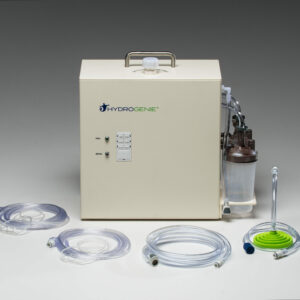
| Equipment Required | HydroGenie or H2 Impact generator | H2 Impact with cannula/mask |
While hydrogen’s antioxidant properties initially captured researchers’ attention, subsequent investigation has revealed a far more complex therapeutic profile.
The discovery that molecular hydrogen upregulates FGF21 expression represents a paradigm shift in understanding its metabolic effects. FGF21 is a hepatic hormone with powerful metabolic regulatory functions [1, 2]:
The hydrogen-FGF21 connection may explain why H2 treatment produces weight loss without reducing food intake—it fundamentally alters energy metabolism at the cellular level [2].
Follow-up research to the original Kamimura study revealed that hydrogen stimulates expression of PGC-1α (peroxisome proliferator-activated receptor gamma coactivator 1-alpha), a master regulator of mitochondrial biogenesis and function. This stimulation occurs through a cascade involving suppression of 4-HNE, recovery of Akt/FoxO1 signaling, and activation of the PPARα pathway [2].
The upregulation of PGC-1α leads to:
Research by Amitani and colleagues demonstrated that molecular hydrogen promotes glucose uptake into skeletal muscle by enhancing GLUT4 translocation to the cell membrane. This effect occurs through activation of multiple signaling pathways including PI3K, PKC, and AMPK—the same pathways activated by insulin and exercise [20].
This mechanism is particularly relevant for type 1 diabetes, where insulin deficiency impairs glucose uptake. The study showed that hydrogen treatment markedly improved glycemic control in STZ-induced type 1 diabetic mice through this GLUT4-mediated pathway [20].
Emerging evidence suggests that hydrogen’s metabolic benefits may partially operate through gut microbiome modulation. The 2023 study by researchers examining impaired fasting glucose patients found that hydrogen-rich water consumption altered gut bacterial composition, with changes correlating to improved metabolic parameters [11].
Specific microbiome effects include:
This gut-metabolic axis may explain some of the differences observed between oral hydrogen consumption and inhalation methods, with oral routes providing the additional benefit of direct intestinal exposure.
At GetHydroGenie, our flagship H2 Impact system utilizes alkaline electrolysis to generate Browns Gas—a precise 2:1 mixture of hydrogen and oxygen. This stoichiometric ratio, also called oxyhydrogen, offers several advantages over hydrogen-only systems:
The H2 Impact Browns Gas generator produces a flow rate of 200 mL/min, allowing for comfortable nasal cannula delivery or infusion into beverages. For maintenance, the system utilizes electrolyte packets that are added to the water reservoir to facilitate the electrolysis process—these never come into contact with the hydrogen gas consumed or water infused.
For individuals managing obesity, diabetes, or metabolic syndrome, molecular hydrogen therapy should be viewed as a complementary approach rather than a replacement for established treatments.
Morning routine: Start the day with 16-24 oz of hydrogen-rich water prepared using the HydroGenie, which can infuse molecular hydrogen into water in under 30 seconds. This provides immediate systemic antioxidant support and may help regulate glucose response to breakfast.
Mid-day session: Perform a 30-minute hydrogen inhalation session using the H2 Impact system. This can be done while working, reading, or relaxing. For those with diabetes, this timing may help regulate afternoon glucose levels.
Evening hydration: Consume an additional 16-24 oz of hydrogen-rich water with dinner. Research suggests evening hydrogen consumption may support overnight metabolic processes and reduce morning fasting glucose levels [10].
Pre-exercise protocol: For those incorporating exercise into their metabolic health regimen, consuming hydrogen-rich water 30 minutes before physical activity may enhance fat oxidation and reduce exercise-induced oxidative stress [22].
When incorporating hydrogen therapy, appropriate monitoring is essential:
Beyond direct effects on weight and glucose metabolism, molecular hydrogen therapy offers several additional benefits particularly relevant to individuals with obesity and diabetes:
Cardiovascular disease represents the leading cause of mortality in individuals with diabetes. Hydrogen therapy has demonstrated multiple cardioprotective effects [23]:
Diabetes significantly increases the risk of cognitive decline and dementia. Hydrogen’s ability to cross the blood-brain barrier allows it to provide direct neuroprotection [24]:
Diabetic nephropathy affects approximately 40% of individuals with diabetes. Research indicates that hydrogen therapy may slow progression of kidney disease through:
Impaired wound healing represents a serious complication of diabetes. Recent innovative research has developed hydrogen-generating wound dressings that promote diabetic wound healing through continuous local H2 production, reduced oxidative stress, and decreased inflammation [26].
Despite compelling evidence, several important limitations and research gaps remain:
Many existing studies, particularly in humans, involve relatively small sample sizes and short durations. While the consistency of findings across multiple trials is encouraging, large-scale, long-term randomized controlled trials are needed to definitively establish hydrogen’s role in metabolic disease management [27].
The ideal concentration, duration, and frequency of hydrogen administration remain incompletely defined. Different studies have used varying protocols, making direct comparisons challenging. Personalized dosing based on individual metabolic parameters may ultimately prove most effective [27].
Research examining hydrogen therapy in combination with standard diabetes medications (metformin, SGLT2 inhibitors, GLP-1 agonists) is limited. Understanding potential synergistic effects or interactions would enhance clinical application [28].
While multiple mechanisms have been identified—FGF21 upregulation, PGC-1α activation, GLUT4 translocation, gut microbiome modulation—the relative contribution of each pathway and their interactions remain unclear. The primary molecular target(s) of hydrogen also remain debated [27].
When implementing molecular hydrogen therapy, equipment quality matters significantly. At GetHydroGenie, we manufacture Browns Gas generators in the United States using alkaline electrolysis technology—the gold standard for hydrogen production.
Our systems offer several distinct advantages:
For those serious about incorporating molecular hydrogen into their metabolic health strategy, investing in quality equipment from a reputable American manufacturer ensures consistent therapeutic results.
The journey from Kamimura’s groundbreaking 2011 study in db/db mice to the expanding clinical evidence of 2025 reveals molecular hydrogen as a legitimate therapeutic option for obesity and diabetes management. The convergence of multiple mechanisms—from direct antioxidant effects to FGF21 upregulation, from gut microbiome modulation to enhanced glucose uptake—provides a comprehensive explanation for hydrogen’s metabolic benefits.
The development of practical delivery methods, particularly hydrogen inhalation protocols that can be implemented at home, has transformed hydrogen therapy from a laboratory curiosity to an accessible intervention. With established safety, growing clinical evidence, and multiple complementary mechanisms of action, molecular hydrogen deserves serious consideration as an adjunct to conventional metabolic disease management.
For individuals struggling with obesity, diabetes, or metabolic syndrome, hydrogen therapy offers a non-pharmaceutical approach that works synergistically with diet, exercise, and medical treatments. While not a magic bullet or replacement for established therapies, the accumulated evidence suggests that molecular hydrogen may provide meaningful support in the challenging journey toward metabolic health.
As research continues to evolve and long-term clinical trials provide additional evidence, molecular hydrogen therapy stands poised to become an increasingly important tool in the comprehensive management of metabolic disease. For those seeking to explore this therapeutic approach, quality equipment like the HydroGenie and H2 Impact systems provide reliable access to this promising intervention.
If you have questions about incorporating molecular hydrogen therapy into your health regimen, our knowledgeable team at GetHydroGenie is available to help. Contact us at (646) 849-9099 to learn more about our American-made hydrogen generating systems and how they can support your metabolic health journey.
About GetHydroGenie: Hydrogen Research, LLC, also known as GetHydroGenie, is a family-owned American manufacturer of molecular hydrogen therapy systems, including the HydroGenie and H2 Impact Browns Gas generators. We utilize alkaline electrolysis technology to produce therapeutic-grade molecular hydrogen for home use. Learn more about our clinical-grade hydrogen water makers and how our Browns Gas generators work.